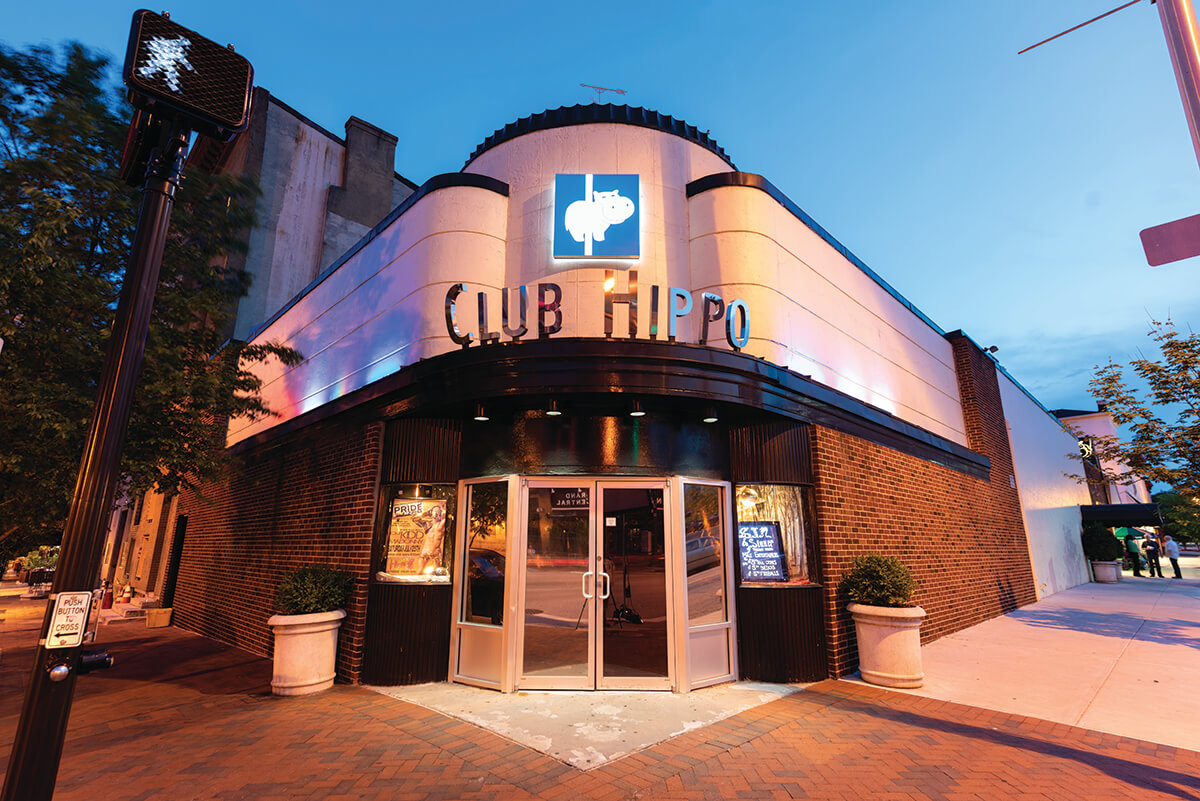
Chuck Bowers built more than a dance floor at Baltimore’s Club Hippo
The longtime owner, who died Sept. 22, helped turn a Mount Vernon nightclub into a refuge, fundraiser and anchor of Baltimore queer life.
Charles “Chuck” Bowers, the longtime owner of Baltimore’s Club Hippo and a prominent advocate for Maryland’s LGBTQ community, died Sept. 22 at his Mount Vernon home. He was 81.
His niece, Cathy Bowers, told The Baltimore Banner that he died of natural causes. A published obituary likewise says Bowers died peacefully in Baltimore, the city where he was born and where he spent decades making room for other people to live more openly.
Bowers began working at the Hippopotamus as a bookkeeper and bought the club in 1978. Under his ownership, the venue at North Charles and West Eager streets became known simply as the Hippo and embraced a motto that defined its public identity: “Where everyone is welcome.”
A refuge with a civic role
The Hippo offered the expected pleasures of nightlife — a large dance floor, drag shows, karaoke, tea dances, pageants and theme nights but its importance went further. For many patrons, entering the club was an early experience of being in public without monitoring every gesture or introduction.
Baltimore’s surviving histories consistently credit Bowers with making the club broadly welcoming across gender and racial lines, even when other queer spaces could be segregated or exclusionary. That history should not be romanticized into perfection, but testimony from longtime patrons makes clear that the Hippo expanded who could imagine belonging in Mount Vernon’s gay nightlife.
During the AIDS crisis, Bowers used the club’s visibility and resources to raise money, host benefits and sound an alarm about a disease met at first with stigma and government neglect. The Maryland Center for History and Culture describes him as an advocate for gay men with AIDS and notes the club’s support for local nonprofits and Broadway Cares/Equity Fights AIDS.
A place that held several eras at once
The Hippo opened in 1972, three years after Stonewall, and closed in 2015 after 43 years at the same corner. Bowers owned it for 37 of those years. The club’s life spanned disco, the worst years of the AIDS epidemic, fights over discrimination and marriage, and a digital shift that changed how queer people met one another.
Its closing was widely described as the end of an era. The building later became a CVS, but the block retains a marker of the man who shaped it: a section of North Charles Street bears the honorary name Chuck Bowers Way. The Hippo’s sign and a collection of photographs, records and ephemera are preserved at the Maryland Center for History and Culture.
Those archives matter because nightlife history is often scattered. Bars close, flyers disappear, and memories remain with people who are not always invited into official accounts of a city. Bowers and longtime Hippo DJ Farrell Maddox helped preserve a record researchers can still use.
What Baltimore inherits
Bowers’ death arrives while Baltimore is again debating how to preserve queer gathering places. Leon’s, another historic bar, closed temporarily this summer after its owner died, prompting a rescue effort. The circumstances are different, but both stories show how much community infrastructure can depend on individual stewards.
Remembering Bowers therefore means more than replaying a favorite song from the Hippo. It means recognizing the labor behind a safe room, supporting current LGBTQ venues and service organizations, and preserving the records of spaces that taught generations of Baltimoreans they could enter as themselves.




Leave a Reply