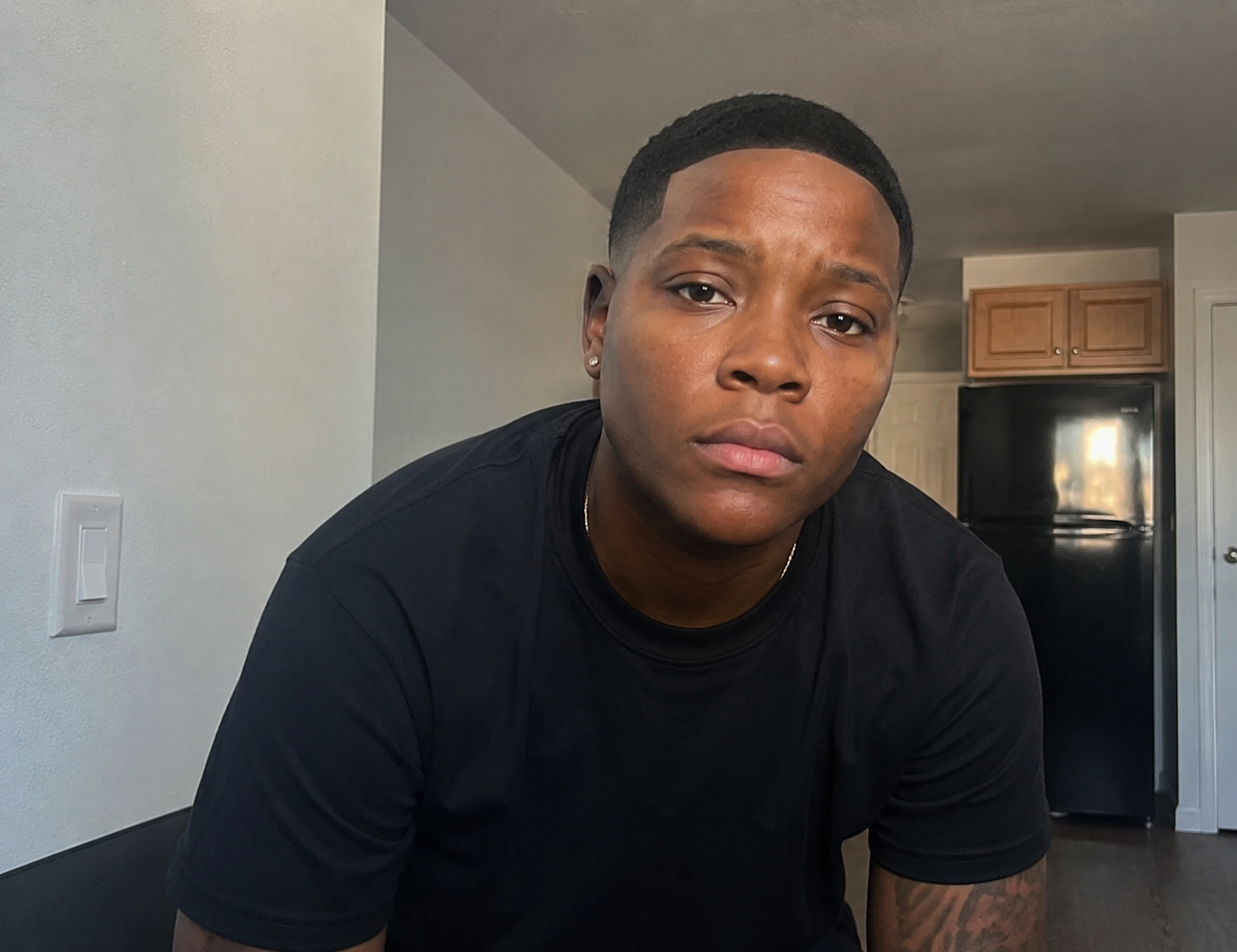
Look, I’m a flamer and even I occasionally need subtitles for the LGBTQ+ community.

You open TikTok one morning and somebody is a sapphic. By lunch, you’ve encountered a stem. Then somebody says they’re masc4masc, another person is soft masc, and before dinner you’re wondering when the community released a software update without telling you.
So I’m fixing that.
Some of these words aren’t actually new. Stud, for example, has decades of history in Black lesbian culture. Others have become more visible because younger LGBTQ+ people use social media to describe attraction, gender expression and relationships with increasingly specific language.
Here’s what everybody is talking about.

Stud
Let’s start here because people misuse this one constantly.
A stud is generally a masculine-presenting Black lesbian or Black queer woman. The term comes specifically from Black lesbian culture and has a long history within the community.
That means “stud” isn’t simply another word for every masculine lesbian.
Your white girlfriend getting a fade does not automatically make her a stud. Please don’t make me schedule a meeting about this.
Stud identity can include masculine clothing, mannerisms or presentation, but it’s also cultural. For many people, it’s an identity rather than a fashion choice.
Femme
A femme is someone who embraces femininity within queer identity or culture.
For lesbians, that might mean dresses, makeup, heels, long nails or other traditionally feminine presentation. But femininity doesn’t determine someone’s sexuality.
That’s actually why femmes have an ongoing problem.
You can walk into a lesbian bar wearing six Pride bracelets, flirting aggressively with the bartender and carrying a tote bag that says I LOVE WOMEN, and somebody will still whisper:
“Do you think she’s gay?”
Yes. Focus.
Stem
Stem usually describes someone whose presentation falls somewhere between stud and femme.
One day she might wear a fitted suit and sneakers. The next day it’s lashes, jewelry and something fitted enough to cause traffic problems.
The important part is that stem isn’t a scientific measurement. Nobody is standing at the lesbian DMV determining whether you’re 62% stud and 38% femme.
It’s about how someone identifies and expresses themselves.
Masc
Masc is short for masculine.
Unlike “stud,” masc can be used more broadly across LGBTQ+ identities. You may hear masc lesbian, masc queer person, masc nonbinary person or simply “masc.”
It’s mainly describing masculine gender expression.
And yes, TikTok has apparently decided that putting “masc” in front of anything immediately increases its attractiveness by approximately 47%.
I don’t make the rules.

Soft Masc
A soft masc generally presents masculine but mixes that masculinity with softer, more feminine or emotionally expressive elements.
Think masculine clothes without feeling obligated to perform traditional masculinity.
Basically: “Yes, I own twelve button-down shirts. Yes, I will also cry during The Color Purple.” Range.
Butch
Butch is absolutely not new.
Butch identity has deep roots in lesbian history and generally describes lesbians or queer women with masculine gender expression. Butch-femme communities were especially important in twentieth-century lesbian culture.
Butch and stud can sometimes look similar from the outside, but they’re not interchangeable identities. Stud has specific roots in Black lesbian culture, while butch has a broader lesbian history.
Sapphic
This is the word everybody suddenly seems to be using.
Sapphic is an umbrella term for women and some nonbinary people who experience attraction to women.
The name comes from Sappho, the ancient Greek poet from the island of Lesbos who wrote about love and desire between women.
And yes.
Lesbos.
That’s where we eventually got the word lesbian.
History occasionally has excellent branding.
The useful thing about “sapphic” is that it’s broader than lesbian. A lesbian can be sapphic. A bisexual woman can be sapphic. A pansexual woman attracted to women can be sapphic.
So all lesbians can reasonably fall under the sapphic umbrella, but not every sapphic person is a lesbian.
There will be a quiz Friday.

WLW
WLW means women loving women.
Simple.
It’s another broad term that can include lesbians, bisexual women, pansexual women and other women attracted to women.
You’ll see it everywhere from TikTok hashtags to book recommendations.
“WLW romance” basically means somebody is about to fall in love with another woman, and I’m about to waste six hours watching edits of them staring at each other.
Enby
Enby is a phonetic spelling of NB, meaning nonbinary.
A nonbinary person doesn’t identify exclusively as a man or woman. Some enbies lean masculine. Some lean feminine. Some are androgynous. Some don’t care about those categories at all.
And no, you shouldn’t automatically call every nonbinary person “enby.” Like most identity terms, use what the person actually prefers.
Androgynous
Androgynous describes a presentation that combines, blurs or moves beyond traditionally masculine and feminine characteristics.
It describes gender expression, not necessarily sexual orientation.
Someone can look androgynous and be lesbian, bisexual, straight, queer, trans, nonbinary or anything else.
Clothes aren’t a sexuality test.
Chapstick Lesbian
A chapstick lesbian usually describes a lesbian whose presentation sits somewhere between traditionally feminine and masculine.
Think less lipstick femme, less masculine butch.
Jeans. T-shirt. Sneakers. Maybe some lip balm.
Essentially, comfortable enough for Target but still prepared to accidentally meet your future wife near the home décor section.
Bambi Lesbian
Yes, this one is real.
A Bambi lesbian generally refers to a lesbian who prefers affection, cuddling, kissing and emotional intimacy over sex, or places less emphasis on sexual activity.
The term actually has older roots but has resurfaced online.
TikTok didn’t invent everything.
Sometimes TikTok just finds an old gay word in the attic and brings it downstairs.
Pillow Princess
A pillow princess generally refers to someone who prefers receiving sexual attention more than giving it.
The term is often used jokingly in lesbian and sapphic communities, although whether somebody embraces the label is another matter entirely.
I’m simply providing definitions.

Stone/ Touch-Me Not
Stone/Touch-Me Not, including identities such as stone butch, can describe someone who prefers giving sexual touch rather than receiving it, sometimes with firm boundaries around how their own body is touched.
This can be deeply connected to someone’s relationship with gender, intimacy and their body.
So unlike the jokes people make online, it’s worth treating this one with a little more respect.
Masc4Masc, Femme4Femme and Stud4Stud
The “4” means “for.”
Masc4Masc = masculine people interested in masculine people.
Femme4Femme = feminine queer women interested in feminine queer women.
Stud4Stud = studs interested in other studs.
You’ll also see combinations like stud4femme and masc4femme.
They’re basically dating preferences written like early-2000s AOL screen names.
Efficient. I respect it.
Queer
Finally, there’s queer.
Queer has become a broad umbrella identity for people whose sexuality or gender falls outside heterosexual or cisgender norms.
However, there’s history here.
“Queer” was used as a slur against LGBTQ+ people for generations. Many people have reclaimed it proudly, especially younger generations and academics. Others still don’t like being called queer.
Both reactions are valid.
Use it for people who use it for themselves.
The Language Will Keep Changing
Here’s the part people sometimes struggle with: LGBTQ+ language isn’t a dictionary somebody finished writing in 1997.
It changes because we change.
Some identities are centuries old. Some emerged from Black queer communities. Some came from lesbian bars and ballroom culture. Others gained new meanings through Tumblr, TikTok and younger generations trying to find language that feels more accurate.
You don’t have to memorize everything.
You also don’t need to roll your eyes every time you hear a term you haven’t encountered before.
Ask.
Listen.
Google is free.
And when somebody tells you what they call themselves, believe them.
Because ultimately, whether you’re stud, femme, stem, masc, butch, sapphic, bisexual, lesbian, pansexual, nonbinary, queer or currently staring at this list thinking, Baby, I’m just gay, we’re all trying to do basically the same thing:
Find language that feels like home.
And preferably find somebody cute while we’re there.
Keep Learning With DinMag
Subscribe to DinMag for more stories about sapphic culture, dating, identity, entertainment, politics, sex and the conversations happening inside our community.


Leave a Reply