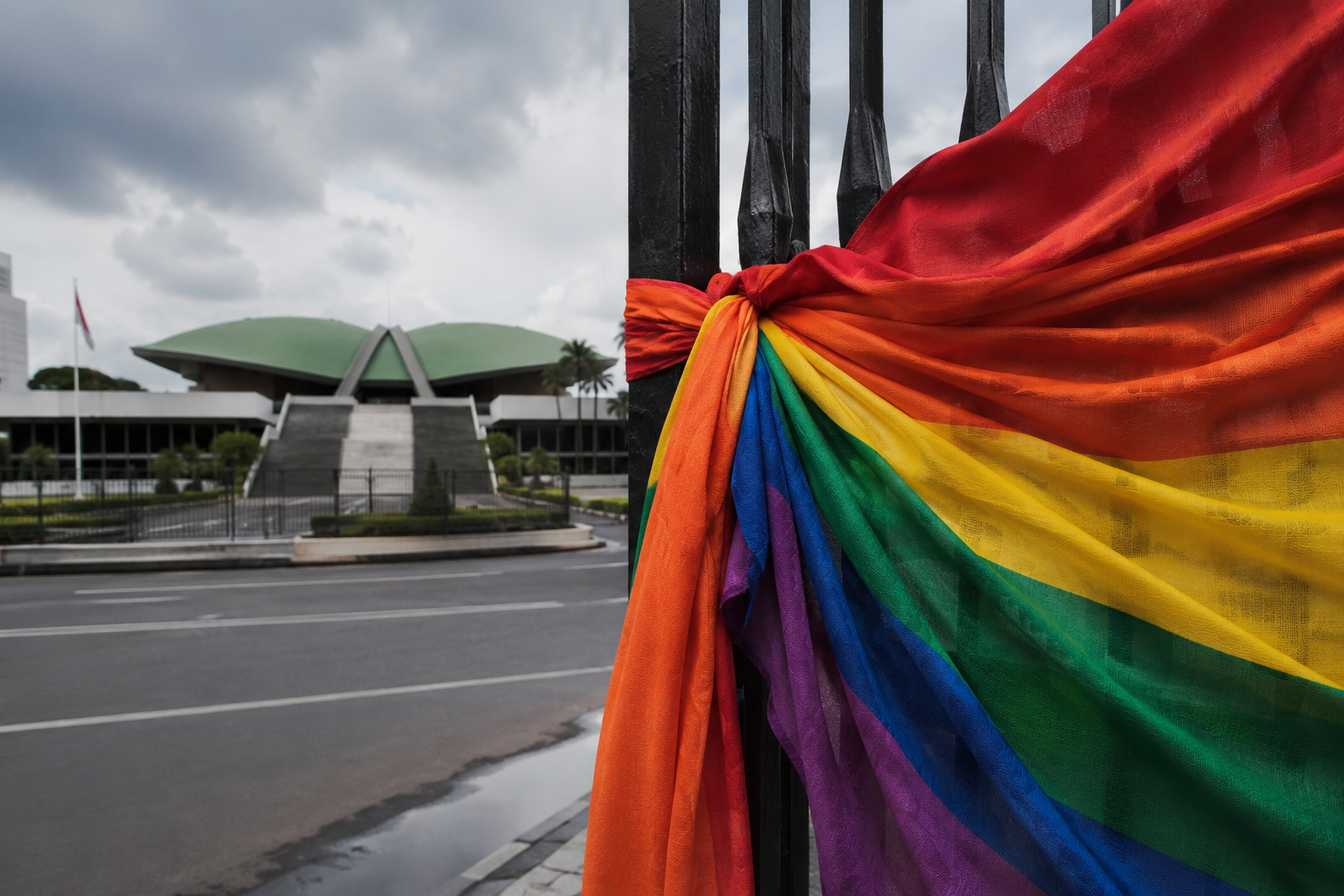
Can your identity be considered a national security threat?
That’s the question people around the world are asking after Indonesia introduced a new national security policy that classifies LGBTQ culture as a “non-military threat” to the country. The decision has ignited fierce criticism from human rights groups, LGBTQ advocates, and international organizations, who say the policy unfairly targets an already vulnerable community.
Unlike traditional security threats such as terrorism or cyberattacks, Indonesia’s policy places LGBTQ culture into a category of social and ideological issues that officials say could affect the nation’s values and stability. While the policy doesn’t create a new criminal law, critics argue that labeling an entire community as a security concern could open the door to increased surveillance, censorship, discrimination, and future legal restrictions.
Human rights organizations didn’t waste any time responding.
Groups including Amnesty International and Human Rights Watch say the designation risks fueling fear instead of protecting the public. They argue that framing LGBTQ people as a threat gives legitimacy to discrimination and may encourage local governments or extremist groups to crack down on LGBTQ events, advocacy organizations, and even everyday expressions of identity.
Supporters of the policy see things differently.
Government officials have defended the move by saying it reflects Indonesia’s cultural and religious values. They insist the policy is intended to preserve social harmony and national identity rather than target individuals. Still, that explanation has done little to calm international concern.
Indonesia has long had a complicated relationship with LGBTQ rights. While same-sex relationships are not illegal across most of the country, LGBTQ Indonesians have faced years of increasing hostility, including police raids, public shaming, canceled community events, and growing pressure from conservative groups. In Aceh Province, where Islamic law is enforced, same-sex sexual activity is criminalized and punishable under local law.
Now, many activists worry this latest policy could make an already difficult situation even harder.
The debate has also reached beyond Indonesia’s borders. LGBTQ organizations across Asia and around the world are warning that policies like this can have a chilling effect, making people afraid to gather, speak out, or seek support. Some fear other governments could point to Indonesia’s decision as justification for adopting similar measures.
For many Indonesians, however, this story isn’t about politics—it’s about people. It’s about families wondering if they’ll be accepted, young people questioning whether they’ll be safe, and communities hoping they won’t become the next target in a growing culture war.
As global attention turns toward Indonesia, one thing is becoming increasingly clear: the conversation is no longer just about one country’s policy. It’s about whether diversity itself can be viewed as a threat—and what that means for LGBTQ people everywhere.
The world will be watching to see what happens next.
This version can also be adapted into a more opinionated editorial or a straight-news AP-style piece if that better fits DinMag’s editorial voice.




Leave a Reply