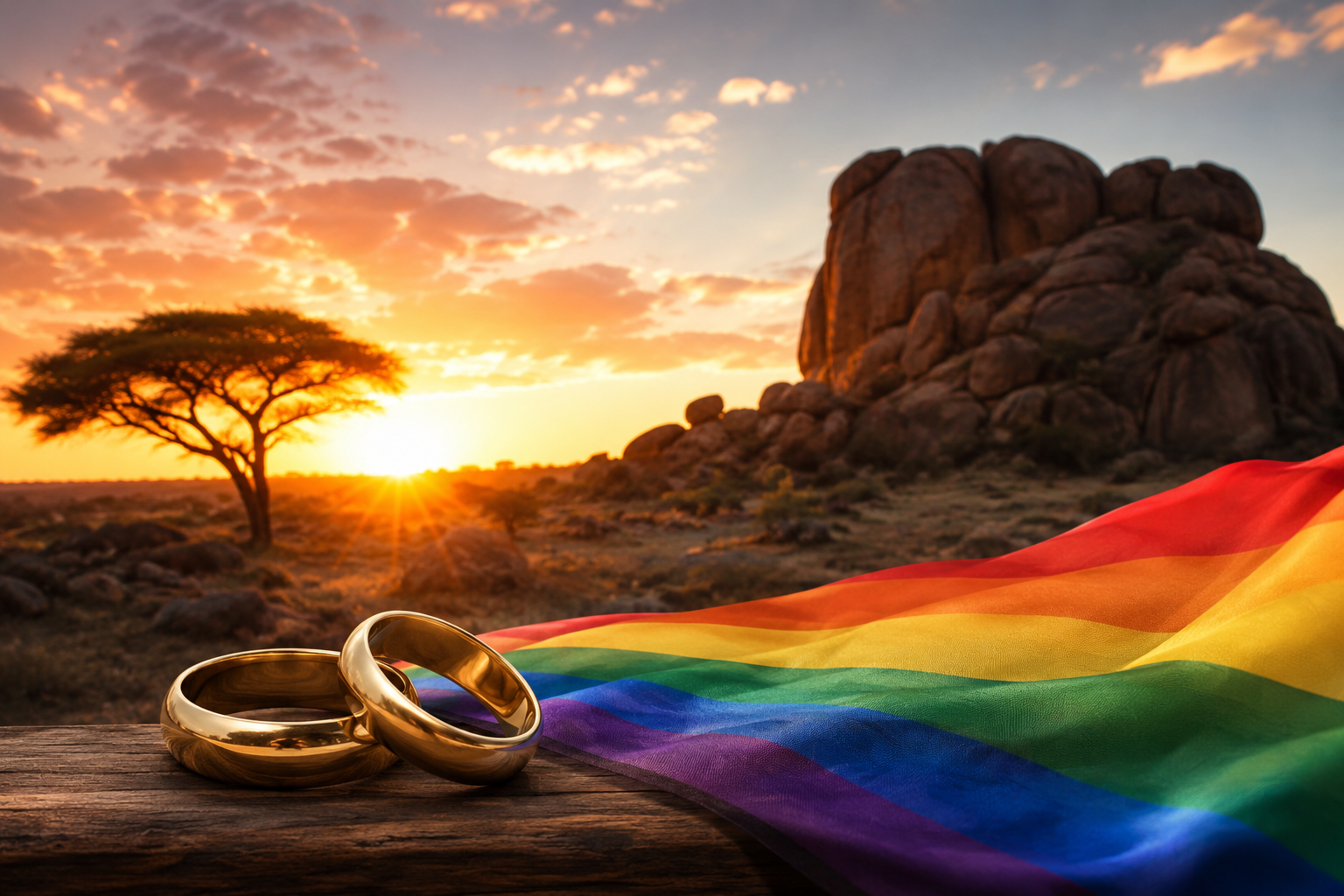
For Bonolo Selelo and Tsholofelo Kumile, this fight has never been about politics. It’s about something much simpler: the right to say, “I do.”
The Botswana couple has taken their love to the nation’s High Court in what legal experts are calling one of the most significant LGBTQ+ cases Africa has seen in years. If they win, Botswana could become just the second country in Africa—after South Africa—to legalize same-sex marriage, potentially setting a powerful legal precedent across the continent.
More Than a Wedding
Selelo, 41, and Kumile, 39, met in 2022, became engaged in 2024, and soon afterward attempted to register their marriage with Botswana’s civil authorities. They were denied because the country’s Marriage Act does not recognize marriages between same-sex couples.
Rather than quietly accepting the decision, they decided to challenge the law itself.
Their lawsuit argues that Botswana’s Marriage Act violates constitutional protections guaranteeing equality, dignity, freedom of association, and protection from discrimination. They contend that they are not asking for special treatment—only the same legal recognition afforded to heterosexual couples.
“My fiancée and I seek to formally create a family through marriage,” Selelo said in court documents. “We seek to enjoy the same rights, dignity and recognition as heterosexual couples.”
Why This Case Matters
Botswana has quietly become one of Africa’s more progressive nations on LGBTQ+ rights.
In 2019, the country’s High Court struck down colonial-era laws criminalizing same-sex relationships. Two years later, Botswana’s Court of Appeal unanimously upheld that decision, declaring that such laws belonged in “the museum or archives,” not modern society. Earlier this year, those repealed laws were formally removed from Botswana’s legal code.
Marriage equality, however, remains the next frontier.
Currently, South Africa is the only African nation where same-sex couples can legally marry, while roughly 30 countries across the continent still criminalize same-sex intimacy in some form. A victory in Botswana would represent a dramatic shift in Africa’s legal landscape.
Not Everyone Is Celebrating
The case has ignited passionate debate across Botswana.
Religious organizations, traditional leaders, and conservative advocacy groups have asked the court for permission to oppose the lawsuit, arguing that marriage should remain exclusively between a man and a woman. Supporters counter that civil marriage is a constitutional issue—not a religious one—and that equal protection under the law should extend to every citizen.
The case has evolved from a private love story into a national conversation about constitutional rights, culture, religion, and the future of Botswana itself.
A Ripple Effect Across Africa?
Legal experts believe this case could resonate well beyond Botswana’s borders.
Countries throughout southern Africa—including Namibia, Zambia, Zimbabwe, and others—continue grappling with questions surrounding LGBTQ+ rights. Courts across the region increasingly cite constitutional protections involving dignity, equality, and privacy when deciding landmark human rights cases.
A ruling in favor of Selelo and Kumile would not automatically legalize same-sex marriage elsewhere, but it could provide persuasive legal reasoning for future constitutional challenges throughout Africa.
What Happens Next?
The High Court is scheduled to hear oral arguments on July 14 and 15, where judges will determine whether Botswana’s Constitution requires the government to recognize same-sex marriages.
For Bonolo Selelo and Tsholofelo Kumile, the case is deeply personal.
But for millions of LGBTQ+ Africans watching from afar, it could become one of the most consequential human rights decisions on the continent in decades.
Whether the court rules for or against them, one thing is already clear: two women seeking nothing more than the right to marry have sparked a conversation that Africa can no longer ignore.




Leave a Reply