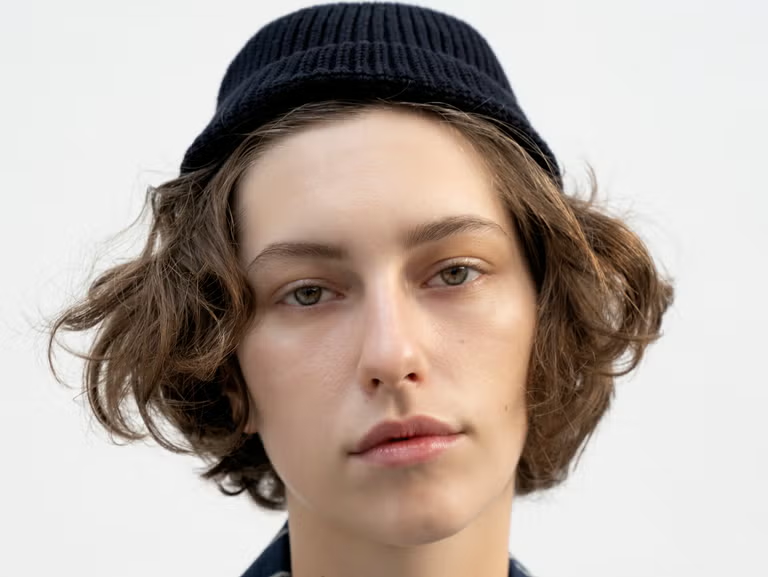
When King Princess calls a song a “lesbian anthem,” people listen. And this week, the artist did exactly that during a special acoustic performance on BBC Radio 1, where they covered “Au Pays du Cocaine” by indie rock band Geese. What might seem like an unexpected song choice quickly turned into a powerful moment especially for sapphic listeners who felt seen, heard, and emotionally wrecked in the best way.

King Princess didn’t just sing the song. They claimed it.
While introducing the performance, King Princess described the track as a lesbian anthem, pointing to its themes of freedom, desire, and longing feelings that hit close to home for many queer women. The result? A quiet but electric moment that rippled across social media and sapphic spaces almost instantly.
Why This Cover Hit So Hard
“Au Pays du Cocaine” isn’t a mainstream pop hit. It’s moody, poetic, and a little mysterious. But that’s part of what made the cover so special. When King Princess stripped the song down to just vocals and guitar, the emotion came forward in a raw, intimate way.
Listeners described the performance as tender, yearning, and deeply queer not because the lyrics spell everything out, but because the feeling does. Queer fans often talk about how lesbian anthems don’t always need explicit lyrics about women loving women. Sometimes, it’s about the vibe: the longing, the freedom, the ache, and the hope.

King Princess understands that instinctively.
The Power of a “Lesbian Anthem”
Lesbian anthems have a long history. From classic rock and indie tracks to pop ballads that were never meant to be queer but somehow became so anyway, sapphic listeners have always found themselves in music even when the industry didn’t make space for them.
When an openly queer artist like King Princess openly names a song as a lesbian anthem, it feels different. It’s not just fans reading between the lines. It’s an artist saying, “This is ours.”
That kind of recognition matters, especially in a music industry where queer women are often underrepresented or boxed into narrow categories.
A Moment That Traveled Fast
Clips of the BBC Radio 1 performance spread quickly online. Fans shared short videos, lyrics, and reactions across social platforms, with many calling the cover “soft but devastating” and “for the girls who love girls.”
Some listeners said the performance made them emotional in ways they didn’t expect. Others joked that King Princess had “no right” to make the song feel that personal. The sapphic community did what it does best turned the moment into shared experience, inside jokes, and collective feelings.
King Princess and Queer Visibility
This moment fits perfectly into King Princess’s larger role in pop culture. Since their breakout, they’ve been unapologetically queer, blending vulnerability with confidence and refusing to water down their identity for mainstream comfort.
By calling the song a lesbian anthem, King Princess wasn’t just praising the music, they were naming a feeling that many queer women recognize but rarely see centered.
It also shows how queer culture often works: meaning is created in community. A song becomes an anthem not because it tops charts, but because it resonates deeply with people who see themselves in it.

Why This Moment Matters
In a time when LGBTQ+ representation is still debated, challenged, and sometimes erased, moments like this feel grounding. They remind people that queer joy and expression don’t always have to be loud protests or viral trends. Sometimes, they’re quiet performances on a radio show that make someone feel a little less alone.
King Princess didn’t release a new single or announce a big project. They simply covered a song, named it honestly, and let it live where it belonged. And for many sapphic listeners, that was more than enough.
Because sometimes, all it takes to create an anthem is the right voice, the right feeling and someone brave enough to say, “This song is for us.”



Leave a Reply