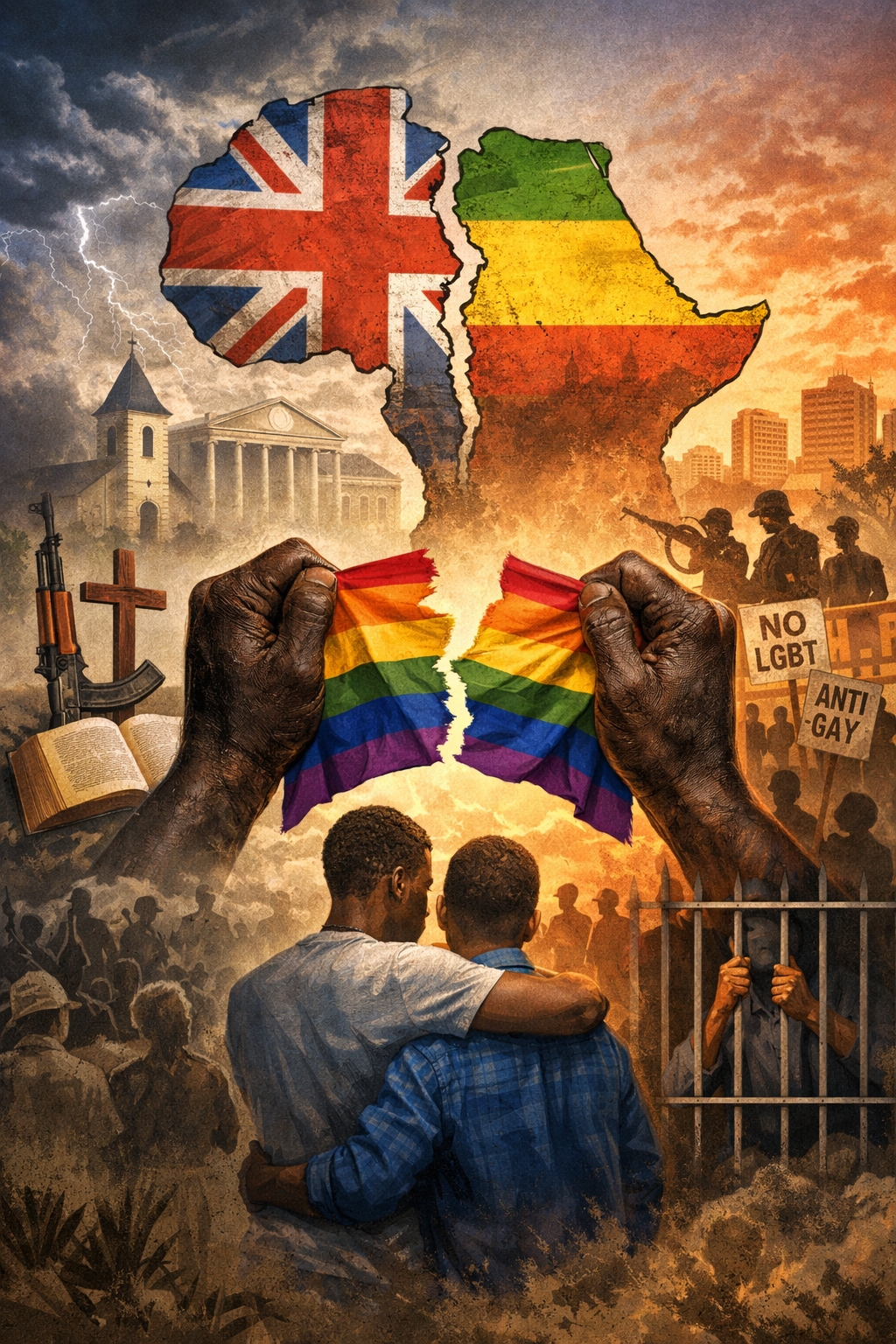
At first glance, this story may seem simple. Some leaders in African countries say they are protecting their culture, families, and freedom from something foreign. They say being LGBTQ is not part of African life. But many activists say the real foreign influence is something else. They argue that many of the laws now being used against LGBTQ people actually came from outside Africa. Some came from colonial rule long ago. Others are being pushed today by powerful religious and political groups from other countries.

This is what makes the story so important. It is not only about sexuality. It is about power. It is about history. It is about who gets to decide what it means to be African.
Today, many countries in Africa still have laws that punish same sex relationships. In some places, leaders are trying to make those laws even stricter. Senegal is one of the clearest examples. In 2026, the president approved a new law that doubled the prison sentence for same sex acts. The law also made it a crime to support or promote homosexuality. Soon after, a young man was sentenced to six years in prison under the tougher rules. Human rights groups say this has created more fear and made police arrests more likely.
Senegal is not the only country moving in this direction. In Ghana, lawmakers have brought back a harsh anti LGBTQ bill. Human rights groups say the country is also hosting a conference that supports so called family values and national freedom. Critics say some of the people and groups connected to that event have links to far right groups in the United States. These groups have praised Uganda’s anti gay law and want other countries to copy it.

Uganda has become one of the best known examples of this crackdown. Its Anti Homosexuality Act was passed in 2023 and was mostly upheld by the courts in 2024. Since then, rights groups say the law has created a climate of fear. People have been threatened, kicked out of their homes, blackmailed, arrested, and cut off from health care. Even speaking up for LGBTQ people can now be dangerous.
Burkina Faso also moved backward. In 2025, it made same sex relationships a crime. Human rights groups said this was a major step in the wrong direction. When you look at Senegal, Ghana, Uganda, and Burkina Faso together, it becomes clear that this is not just one country acting alone. It looks more like a growing trend.
But here is the part many people do not know. A lot of these anti gay laws are not originally African at all. Many of them go back to colonial times, especially to laws brought by the British Empire. In other words, some of the same laws now being defended as African tradition were actually forced onto African countries by foreign rulers many years ago.
That does not mean the problem is only about the past. These old laws are being given new life today. Rights groups say some modern anti LGBTQ campaigns are being supported by foreign religious and political networks. These groups help spread messages about family, morality, and national identity. They also help connect leaders in different countries who want to pass similar laws.
Still, it is important to understand that this is not just a story about outsiders. Local politics matter too. Religion matters. Public opinion matters. In some cases, leaders use LGBTQ people as an easy target. Blaming a small group can help them look strong or distract people from other problems like poverty, corruption, or weak leadership.
Even with all of this bad news, the picture is not the same everywhere. Some African countries have moved in the opposite direction. South Africa has some of the strongest LGBTQ protections in the world. Angola and Mozambique have taken steps to decriminalize same sex relationships. Mauritius also struck down an old colonial law. These changes show that Africa is not moving in only one direction. Different countries are making different choices.

That is why this story matters so much. Both sides are fighting over the same question. What is truly African. Some leaders say queerness is foreign. Activists say the laws used to punish queer people are the real foreign import. This is not just a debate for lawyers or politicians. It affects real lives. It shapes arrests, families, health care, and safety.
In the end, this is not only a story about laws. It is a story about history, identity, and belonging. It is about who gets accepted and who gets pushed aside. And it is a story that the world should keep watching, because it is far from over.



Leave a Reply