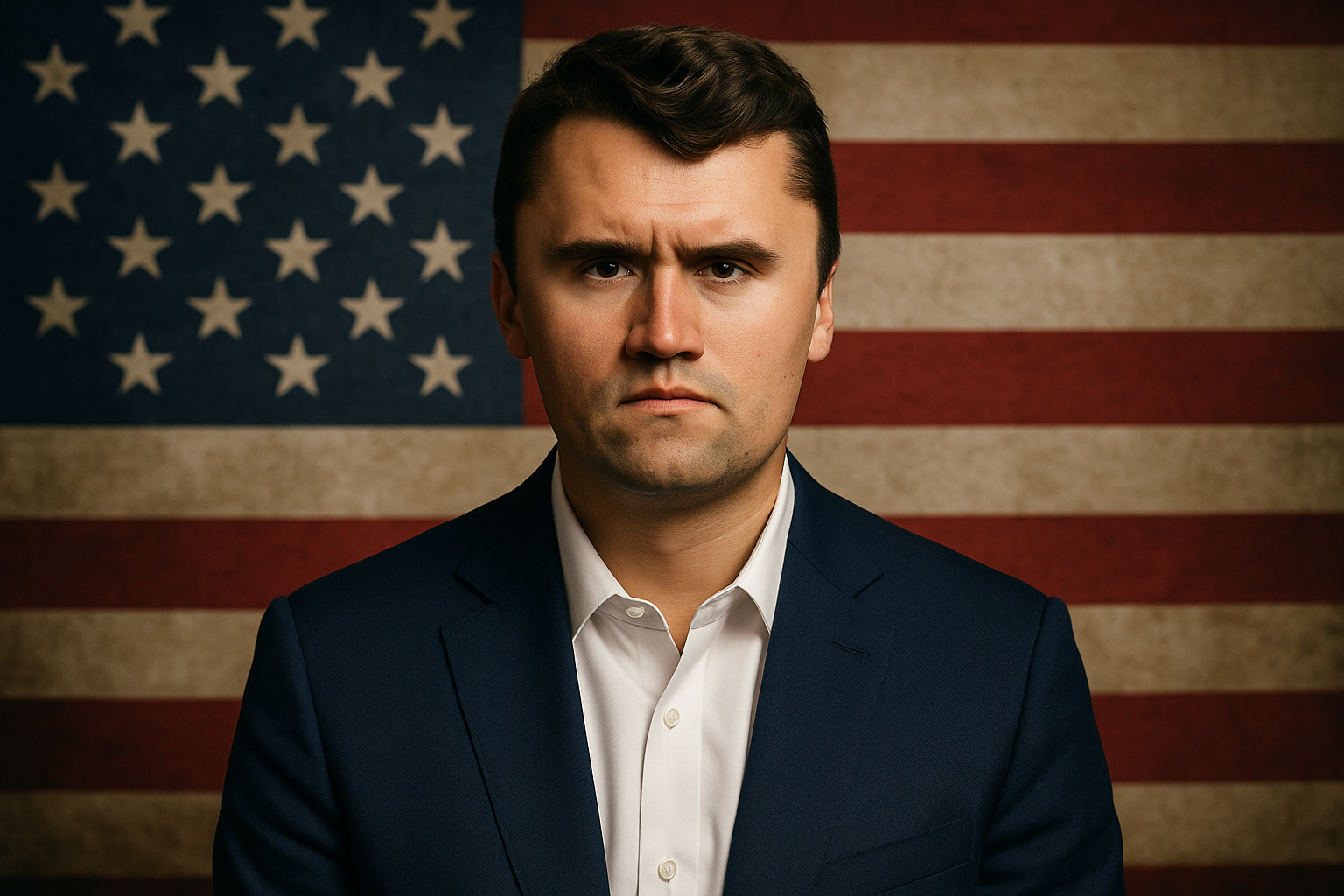
For over a decade, Charlie Kirk cultivated a public image as the conservative wunderkind who gave voice to frustrated young right-wingers and fearlessly swung at the cultural left. On September 10, 2025, that voice was silenced by a single bullet in Utah—an act that instantly transformed him from political influencer to a symbol of America’s toxic polarization.
The Suburban Launchpad
Born in 1993, Kirk grew up in Arlington Heights, Illinois—an ordinary backdrop for someone destined to build an extraordinary career. By his late teens, he was already hungry to play in the big leagues of politics. He skipped the conventional track of college and bet everything on the idea that the conservative youth were an untapped army waiting to be organized. At just 18, he co-founded Turning Point USA.
What began as a fledgling campus group in 2012 became, within a decade, a multimillion-dollar machine. Its calling card? Watchlists of “radical professors,” meme-heavy content aimed at college students, and conferences that looked more like rock shows than policy seminars. Kirk’s message was simple: the left is out to control culture, and young conservatives needed to fight back.

The Showman and the Machine
Kirk wasn’t just a strategist; he was a showman. His podcast, The Charlie Kirk Show, pumped out daily doses of outrage and affirmation. His debates with college students went viral, his conferences became must-attend events for young conservatives, and his face was everywhere—from Fox News to Instagram reels. He married former Miss Arizona Erika Frantzve, started a family, and leaned hard into Christian-nationalist themes, framing himself as both culture warrior and a man of faith.
But his rise came with controversy. Critics accused him of pushing election conspiracies, COVID-19 misinformation, and dangerous rhetoric about race and gender. Investigative journalists flagged questionable financial practices at Turning Point USA. Yet none of it slowed him down. Donors kept signing checks, and Kirk kept growing his empire through spinoffs like Turning Point Action and Turning Point Faith.
September 10, 2025: The Collapse on Stage
Then came the day that changed everything. At Utah Valley University, Kirk took the stage—then the echo of a gunshot ripped through the air. A long-range bullet struck his neck as horrified students and staff ducked for cover. He was rushed to a hospital but didn’t make it. At just 31 years old, the man who prided himself on “owning the libs” was suddenly the victim of America’s deepening political violence.
Authorities briefly detained a suspect in tactical gear but later released him, leaving the public with a chilling uncertainty: Who wanted Charlie Kirk dead, and why? Was it personal? Political? Random? In a country where political violence has edged from unimaginable to unsettlingly common, the line between those categories is increasingly blurry.
The Legacy We Can’t Ignore
In death, Kirk is destined to be mythologized. To the right, he is a martyr—a man gunned down for daring to speak unpopular truths. To the left, he’s a cautionary tale about where demagoguery and incendiary rhetoric can lead. The uncomfortable truth is that both readings say more about us than they do about him.
Kirk thrived in an America addicted to outrage. He turned provocation into a business model, wielded social media like a weapon, and proved that in the 21st century, politics is as much performance as it is policy. His killing is not just an end to his story; it’s a mirror reflecting a nation spiraling into extremes where disagreement no longer ends in debate, but in bloodshed.
Kirk was a product of the America we built, and his death is a warning about the America we’re becoming.




Leave a Reply