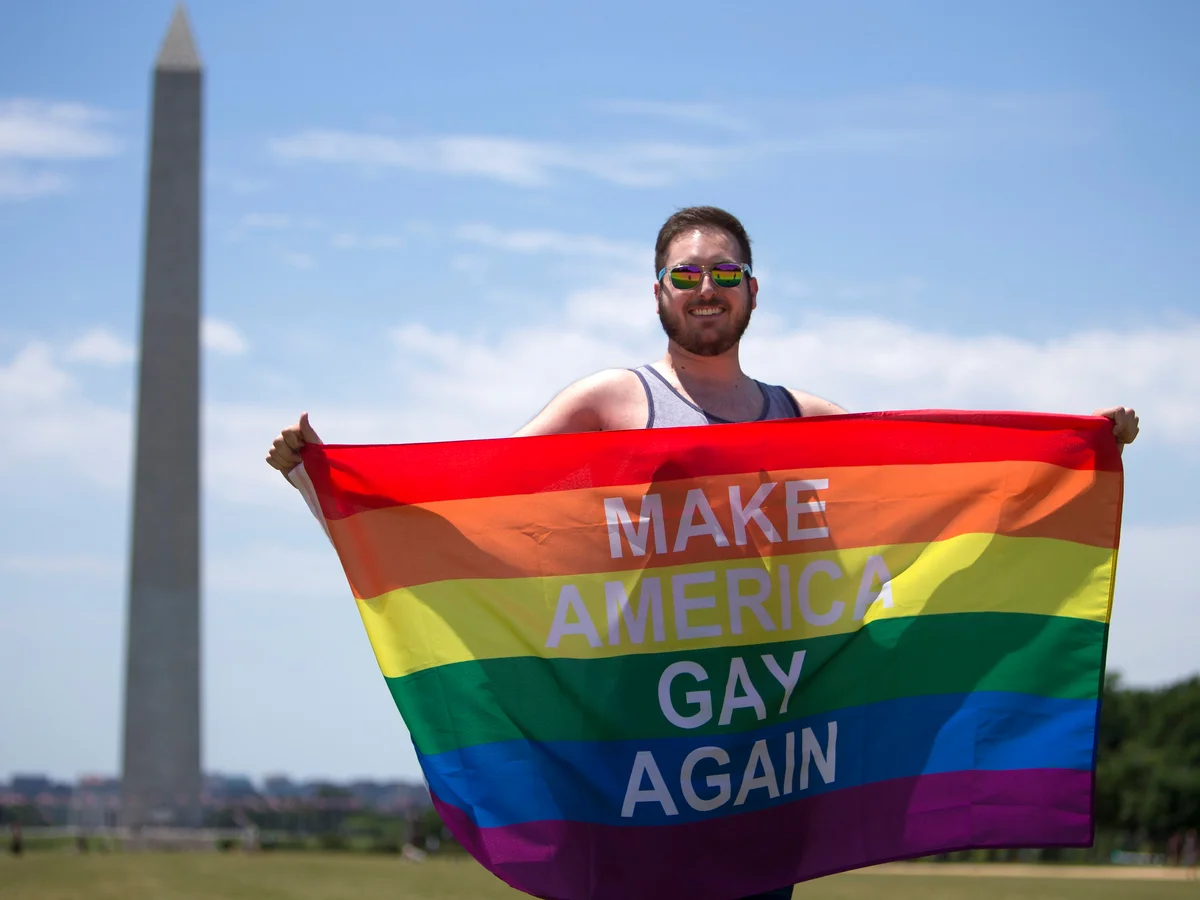
In recent political discourse, a term has surfaced to describe openly gay men serving in prominent roles within Donald Trump’s administration: “A‑Gays.” This label has sparked intense debate—some praise the visibility; others point to it as a glaring hypocrisy amid policies they argue are hostile toward the broader LGBTQ+ community.
Who Are the “A-Gays”?
The New York Times profile refers to the group of gay conservatives in Trump’s inner circle as the “A‑Gays”—a powerful “new power tribe” on Capitol Hill, especially influential in MAGA politics. These individuals—like Scott Bessent, Richard Grenell, Bill White, and others—hold high-ranking positions. Their presence is, at face value, a landmark for gay representation in a Republican administration.
Richard Grenell notably became the highest‑ranking openly gay U.S. ambassador and served as Acting Director of National Intelligence. Scott Bessent made history as the first out gay cabinet secretary confirmed under a Republican president. Trump himself has stressed these appointments reflect merit, not identity.
The Contradiction: Representation Amid Rollback
Yet, these symbolic gains come amidst a sweeping series of anti-LGBTQ+ measures—particularly targeting transgender rights. The administration has enacted dozens of executive orders that rescind protections for transgender individuals, including bans on gender-affirming care, restrictions on military service, and the erasure of transgender recognition across federal institutions.
Critics call out the disparity: while gay men in leadership are celebrated, policies aggressively marginalize transgender people. Experts characterize this as a deliberate “divide and conquer” strategy, sowing fragmentation within the LGBTQ+ community.
Furthermore, LGBTQ+ federal employees report a renewed “Lavender Scare”—a resurgence of fear and surveillance reminiscent of past persecutory eras—through DEI dismantling, denial of protections, and silencing of support networks.
Community Response: Celebration Meets Resistance
The juxtaposition has led to a complex reaction:
- On one hand, some within the community—particularly conservative gays—welcome these appointments as roles where traditionally “underrepresented” individuals finally have a voice. Figures in Log Cabin Republicans celebrate these gains.
- On the other, LGBTQ rights groups argue that visibility offered by gay officials cannot excuse policies that roll back rights, erase trans identities, or dismantle inclusion efforts. They view the “A‑Gays” narrative as a veneer that distracts from the administration’s regressive agenda.
At the Crossroads: Identity Politics and Inclusion
The “Big Gay Government” is more than a catchy phrase—it encapsulates the tensions between individual identity and institutional power. Visibility for some does not equate to equity for all.




Leave a Reply