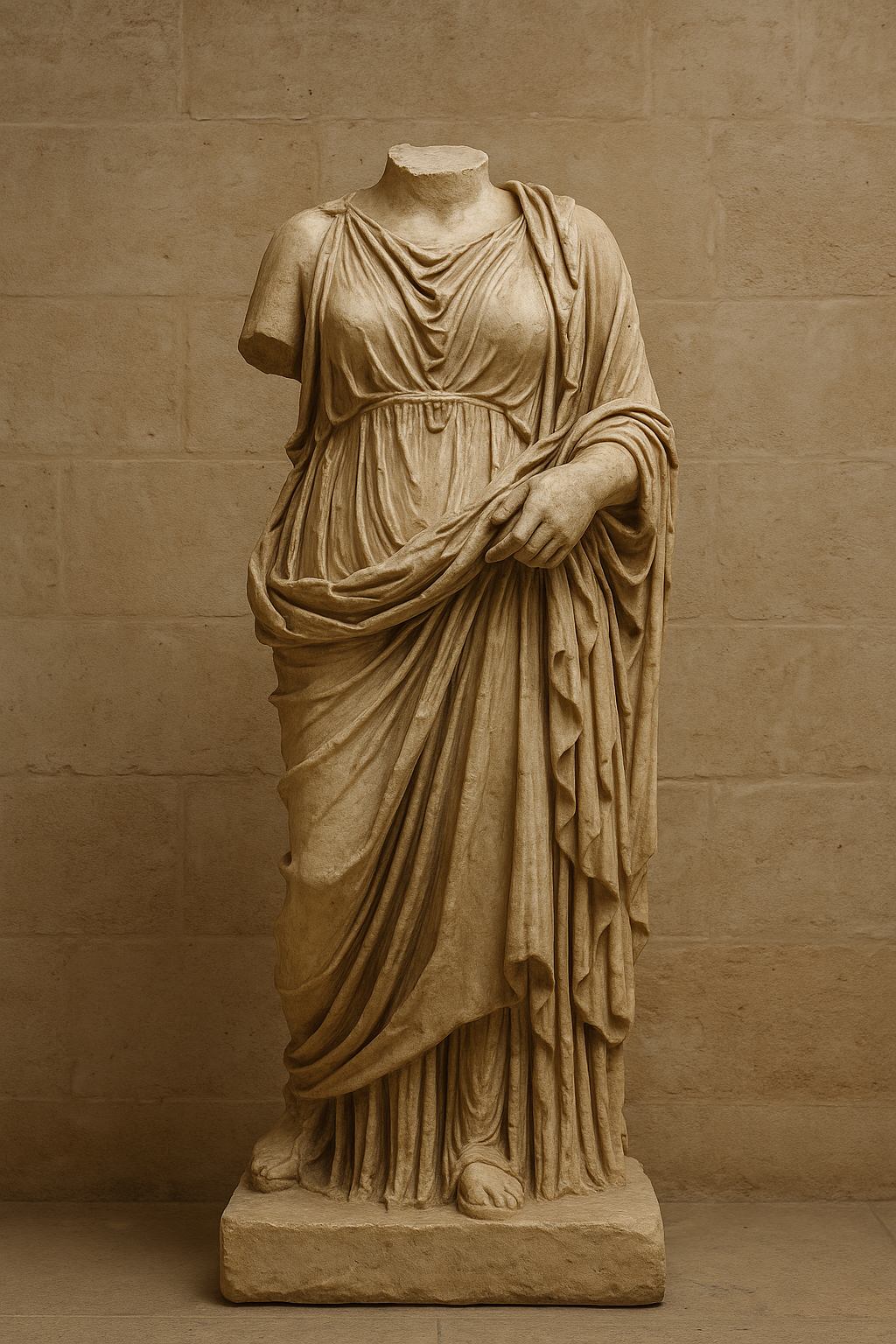
Long before rainbow flags waved proudly in parades or “queer visibility” was a movement, there was Sappho — the ancient Greek poet whose words of love and longing still echo across 2,600 years. She lived on the island of Lesbos around 600 BCE, which had the first queer artist collective if you ask historians.

The Woman Behind the Myth
Sappho was born into a wealthy family on the island of Lesbos, in the Aegean Sea. She became known for her lyric poetry — verses meant to be sung to the strumming of a lyre (think of her as the Beyoncé of ancient Greece, but with more togas and fewer backup dancers). Unlike the grand, war-heavy epics of Homer, Sappho’s work focused on the personal: the ache of love, the sting of jealousy, and the dizzy joy of desire.
What set her apart was not just her talent but her perspective. She wrote about women loving women in a world that didn’t exactly encourage that kind of honesty. Through fragments of her poetry — literally fragments, because ancient book preservation wasn’t great — we hear her describe female beauty, affection, and the powerful emotions that come with it. It’s no wonder the words “sapphic” and “lesbian” both trace back to her name and her home island.
Why She’s Important to Lesbians
Sappho is not just a historical curiosity; she’s a symbol of endurance. For centuries, lesbian love was ignored, punished, or erased from history. Yet here was a woman, in the 6th century BCE, writing unapologetically about her desire for other women — and doing it so beautifully that even Plato called her “the Tenth Muse.”
Her poetry gave generations of women a language for love that history tried to silence. Before “lesbian” was an identity, Sappho’s verses were a mirror — a quiet affirmation that women’s love for women was not only real but worthy of art.

When and Why She Became Popular
Sappho’s reputation has had its ups and downs. In ancient Greece, she was revered as one of the greatest poets who ever lived. Then, during the Middle Ages, her work was mostly suppressed or lost. Her revival began in the Renaissance, when scholars rediscovered her poetry and realized she wasn’t just another mythic name — she was revolutionary. By the 19th century, her name became central to the emerging discourse around same-sex love among women. Victorian writers and early feminists whispered her name as a kind of coded recognition — a literary wink that said, “We see each other.”
Her popularity surged again in the 20th century, especially during the feminist and LGBTQ+ movements of the 1970s. Lesbians and queer artists reclaimed her as their ancestor — a figure who had written about their experience long before language caught up to identity.
And today? She’s having yet another moment. The fragments of her poetry — often just a few surviving lines — feel hauntingly modern. Lines like “Someone, I tell you, will remember us” hit differently in an age obsessed with visibility, legacy, and the fight to be remembered truthfully. In the digital age, Sappho’s voice feels like the original queer tweet — short, emotional, and devastatingly relatable. Her work has found new audiences through social media, queer scholarship, and pop culture references. She’s the poetic grandmother of every queer artist, writer, and lover who insists that softness and passion are acts of rebellion.
To modern lesbians, Sappho represents more than history — she’s a proof of existence, a reminder that queer love has always been here, even when it was written on crumbling papyrus. She gives the ancient world a heartbeat that still syncs with ours.
The Final Word
Sappho may have lived over two millennia ago, but her words are still alive — whispered, quoted, tattooed, and taught. She wrote the world’s first lesbian love songs and, in doing so, gave us something timeless: the courage to feel deeply and love boldly.
Don’t forget to support LGBTQ+ Media.




Leave a Reply