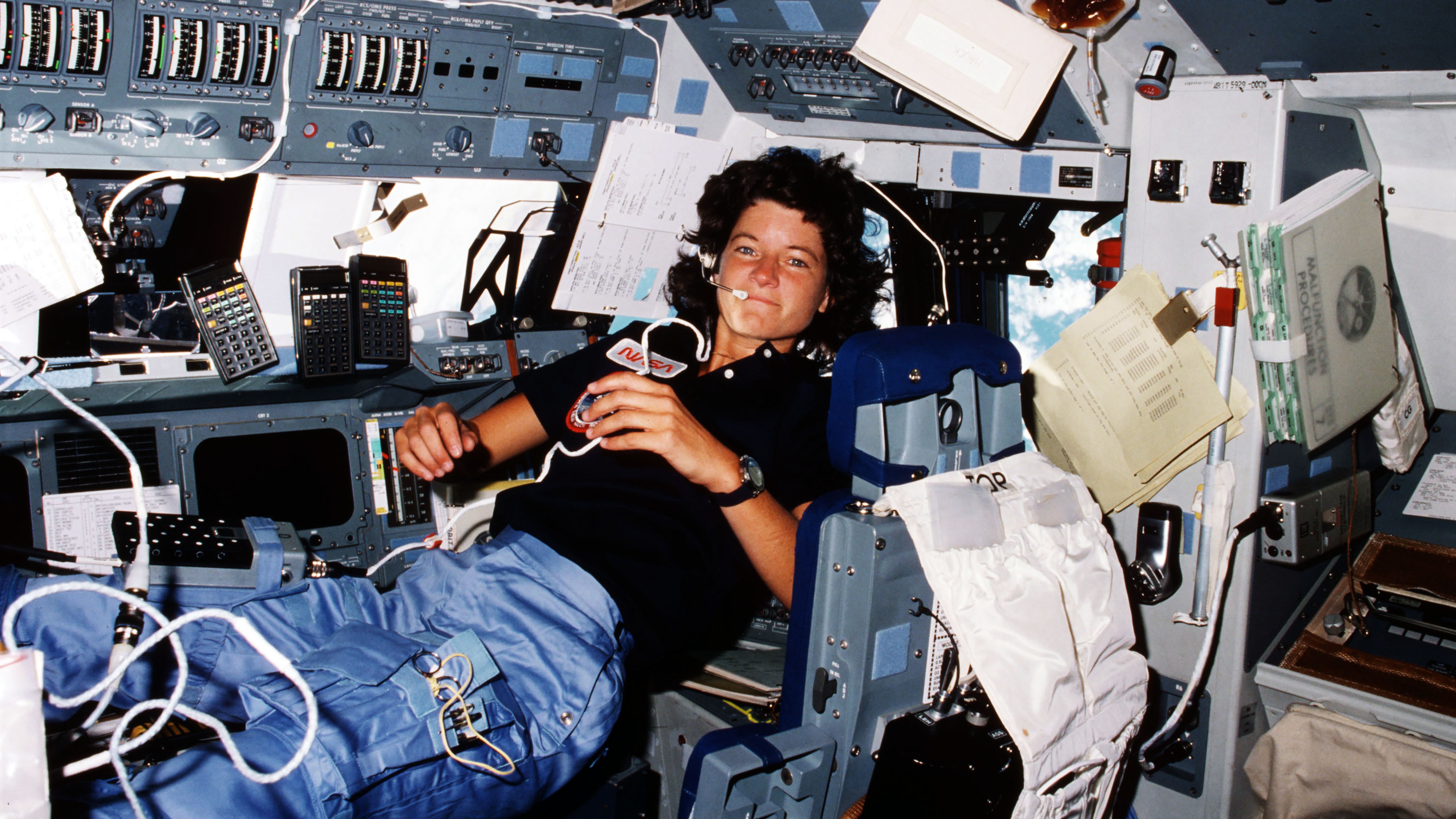
Sally Ride didn’t shout her way into history. She glided in—focused, brilliant, and calm—then rewired what millions of kids thought was possible. In 1983, at just 32 years old, she climbed aboard the space shuttle Challenger and became the first American woman in space. That single launch flipped a switch for a whole generation: space wasn’t just for the guys anymore.

Ride’s path started far from the launchpad. She grew up in Los Angeles, loved tennis, and fell hard for physics. After studying at Stanford—earning not one but four degrees, including a PhD—she answered a newspaper ad from NASA looking for new astronauts. Yes, really: a help-wanted ad changed space history. She joined NASA’s 1978 astronaut class, the first U.S. group to include women. Five years later, she flew on mission STS-7; the next year she returned on STS-41-G. In total, she spent more than 343 hours off the planet.
However, being first came with nonsense. Reporters asked if space would mess up her makeup and whether she cried on the job. Ride, steady as ever, let her work do the talking—operating the shuttle’s robotic arm, running experiments, and proving that skill beats stereotypes, every time.
After leaving NASA in 1987, Ride didn’t fade into the background. She served on both major accident boards—Challenger and Columbia—the only person to serve on each. Then she turned her energy to teaching and outreach, especially for girls in science. In 2001 she co-founded Sally Ride Science to bring smart, hands-on STEM learning to classrooms and camps. The program later relaunched at UC San Diego and continues her mission today. If you’ve ever seen a middle-schooler light up while building a sensor or analyzing real satellite images, that’s her legacy in action.

Here’s the part of Sally Ride’s story many people didn’t know while she was alive: she was a lesbian. Ride kept her relationship with science educator Tam O’Shaughnessy private for nearly three decades. It wasn’t a secret to close friends, but it wasn’t public either. Only after Ride died of pancreatic cancer in 2012 did the world learn about their partnership—revealed, with Sally’s permission, in her obituary. That made her the first known Lesbian astronaut, a fact that matters deeply for those who need to see themselves in the stories we tell about science and space.

Recent documentaries and interviews add new texture here. O’Shaughnessy has shared how the two balanced love, privacy, and a very public career. She says Sally gave her the OK—just ten days before her death—to finally speak openly about their life together. It wasn’t about headlines; it was about truth, dignity, and giving future astronauts a fuller picture of who trailblazers really are.
Ride’s impact didn’t stop at the classroom door or the TV screen. In 2013, President Barack Obama awarded her the Presidential Medal of Freedom, the nation’s highest civilian honor, calling out both her spaceflight and her work to open STEM to young people. The medal was posthumous, but the message landed: this quiet rebel changed her country.
So what does Sally Ride mean in 2025? She’s a North Star for curious kids, especially girls and LGBTQ+ youth, who are told—directly or indirectly—that science “isn’t for them.” Her life replies: Watch me. She showed that you can be brilliant and private, playful and precise, competitive on the court and collaborative in the lab. She also showed that representation matters. When a kid sees someone like them flying a spacecraft or leading a lab, a door in the mind unlocks. That’s culture change in real time.
If you want one simple takeaway, make it this: Sally Ride made space bigger. Not the vacuum above us—the community down here. By flying well, teaching hard, and living honestly (on her own timeline), she expanded who gets to belong in science. That’s the kind of gravity we should all feel.
And for anyone hearing the old line “You can’t be what you can’t see,” remember the update Sally helped write: you can be what you do—and when you do it well, others will see a path they didn’t know was there. Then they’ll take it even farther. That’s how you build a universe worth exploring.
Further viewing: The 2025 documentary Sally offers an intimate look at her life and partnership and is now streaming, adding fresh voices and archival moments to a story that still inspires.
Don’t forget to support LGBTQ+ Media.




Leave a Reply