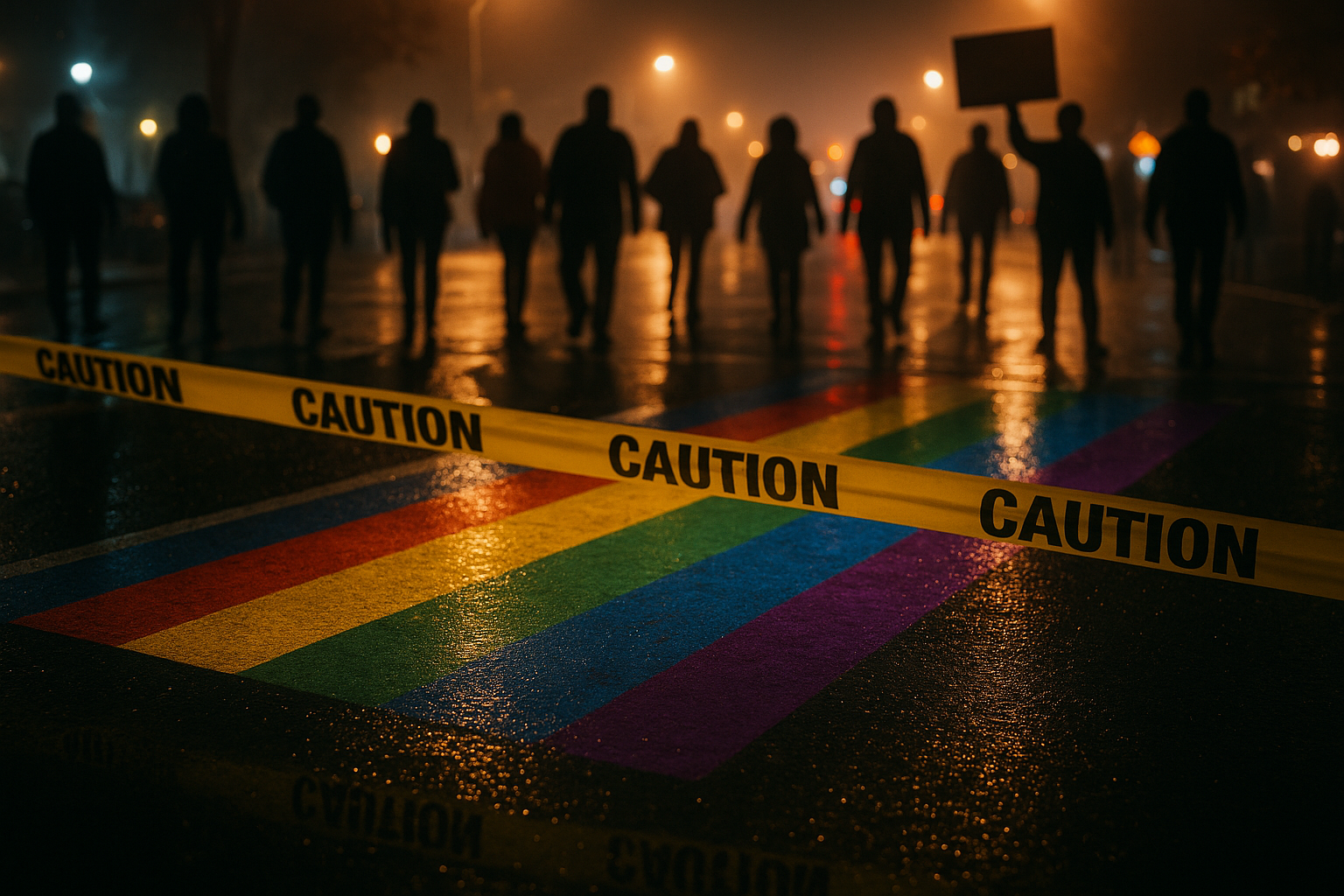
Fort Lauderdale is in a fast-moving fight with Florida over whether rainbow-painted crosswalks belong on city streets. State transportation officials have ordered cities to strip away “non-standard” street art—including Pride designs that honor the 49 victims of the 2016 Pulse nightclub shooting—and warned that funding could be withheld if cities refuse. In late August, after a three-hour special meeting, Fort Lauderdale’s commission voted unanimously to appeal the order and explore additional legal action, even if it risks millions in transportation dollars.
The conflict isn’t happening in a vacuum. In Orlando, crews painted over the rainbow crosswalk near the Pulse site under the new policy. Protesters returned with chalk—several were detained as they tried to recolor the stripes—turning a memorial into the state’s most visible flashpoint. Nearby, the back-and-forth has continued with officials repainting the crossing again after activists restored it.
Florida’s case rests on uniformity and safety. Governor Ron DeSantis has argued that “street art got out of hand” and that roads should be used for their intended purpose, while the Florida Department of Transportation (FDOT) says it must keep markings consistent and free of “social, political, or ideological” messages. A department memo circulated this summer instructed districts to remove non-compliant pavement art; FDOT has also issued 14-day notices to cities and threatened to charge them for removals or cut off funding if they don’t comply.
Fort Lauderdale’s leaders say the state went too far. The FDOT letter identified four local sites—Sebastian Street east of A1A, Breakers Avenue at Riomar Street, Breakers Avenue at Terramar Street, and East Las Olas Boulevard at Almond Avenue—for repainting. City staff noted that none of these are state roads, shared crash data they say shows no uptick in collisions after the art went in, and argued that the designs serve as traffic-calming and community identity, not confusion. The commission authorized an administrative appeal and retained outside counsel; officials admit the appeal may be a formality but say the city must stand up for local control.
The state’s crackdown is broader than one beach town. St. Petersburg’s progressive-pride intersection was painted over this week, and cities from Key West to Miami Beach are weighing appeals as their deadlines hit. Supporters of the removals frame the effort as basic safety and federal alignment; opponents call it a culture-war policy that erases memorials and chills LGBTQ+ visibility in public space.
What happens next will hinge on law, money, and timing. If FDOT holds the line, projects that rely on state dollars could be squeezed, giving cities a hard choice: keep the art and risk funding, or comply and anger residents who see the stripes as a promise that their city welcomes everyone. If courts step in, judges will have to balance Florida’s authority to standardize markings against home-rule powers and the civic value of memorials. Either way, the debate over a few painted lines has become a referendum on who gets to define the look—and the values—of Florida’s streets.




Leave a Reply